
At GDC, Xbox VP Jason Ronald lays out the company’s vision for the future of Microsoft’s console.
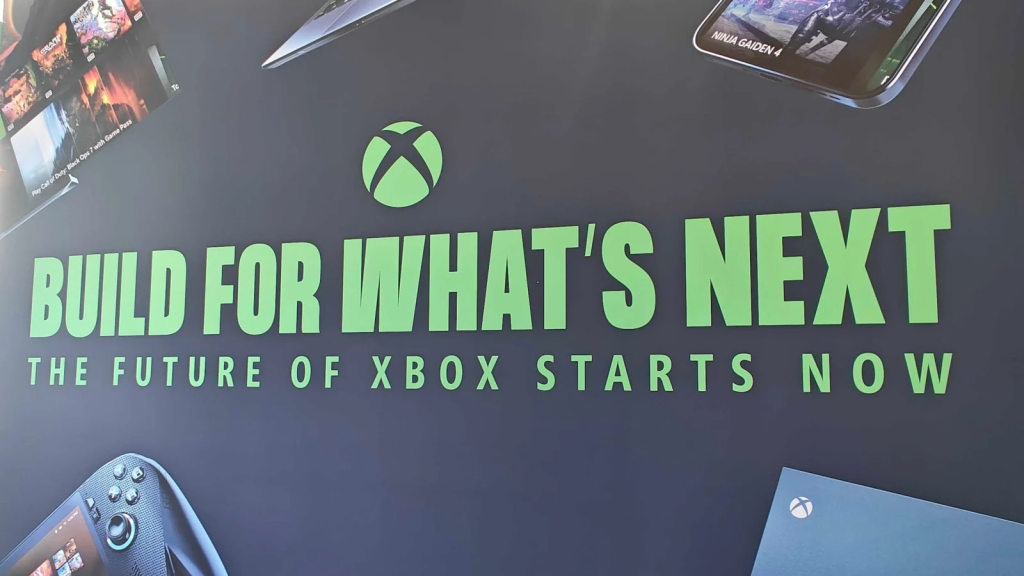
It’s unclear when the next-gen Xbox will launch, but Microsoft plans on shipping the first prototypes of the upcoming console to game developers next year.
“I’m excited to share we’ll send alpha versions of Project Helix to developers starting in 2027.” Jason Ronald, VP of Next Generation at Xbox, said at San Francisco’s GDC Festival of Gaming.
In a GDC session, Ronald laid out Microsoft’s future plans for Xbox, including Project Helix, the code name for the next-gen console. He was light on new details, although he promised the hardware would feature a major leap in gaming performance.
The alpha prototype, or development kit, will operate like a test console for game developers, offering a preview of the final product’s capabilities.
We were hoping Microsoft might show what the “alpha” dev kit would look like, especially after the company teased it in a tweet last night. But Ronald left us hanging. Still, the announcement is important since it shows the company is gearing up for an eventual launch. The dev kits arriving in 2027 are prompting speculation that the next-gen device will arrive later in the year or in 2028. given the ongoing memory shortage and the time needed for developers to prepare.
Ronald also offered a brief overview of Project Helix, which is being co-developed with chipmaker AMD. (Last month, AMD’s CEO indicated that it would launch sometime in 2027.)
Ronald was light on technical details, but he said the upcoming console will feature major gains in ray tracing, AI upscaling for higher frame rates, and better compression to load deep textures for graphics. Project Helix will also leverage AMD’s Work Graphs API to offload more game rendering to the GPU, freeing up CPU resources.
The result will also “eliminate CPU bottlenecks, meaning that the GPU can generate its own workloads in real-time, delivering a massive uplift in performance and enabling massive real-time simulations,” Ronald said.
In addition, Microsoft and AMD are developing silicon not just for one product, but also for other hardware, including handhelds. “The same technologies that we’re introducing will also show up in AMD’s discrete GPU roadmap and the same chips that power the cloud,” he said. “Because ultimately what we are trying to do is we’re trying to provide one common platform for game developers,” making it easy to optimize titles for a wide range of devices.
Ronald also reiterated that the upcoming console will play both Xbox titles and PC games, but he didn’t elaborate. That said, he signaled that Microsoft wants to unify its gaming experiences across devices, including Windows 11 PCs, consoles, handhelds, and phones.
“The days of people defining themselves as ‘I’m a console gamer,’ or ‘I’m a PC gamer,’ or ‘I’m a mobile gamer’ don’t really exist anymore,” he said. “The biggest games are playable across multiple screens, and the most engaged gamers play across multiple devices.”
He later added: “We as a game industry need to move toward that model, and we as Xbox have to design and build the platform not only for players, but also developers.”
As part of the one platform approach, Ronald also revealed that the “Xbox mode” previously limited to Windows 11 gaming handhelds is expanding to Windows PCs next month.