
ANTALYA, Türkiye, Nov. 19. 2026 — As COP31 concludes, global leaders are shifting their focus from setting climate targets to delivering concrete results. Kane Xu, Senior Vice President of Envision Energy and President of the International Business Product Line, wrapped up a week of high-level engagements by urging the industry to move beyond ambition and focus on delivering affordable, reliable, and scalable clean energy. In his view, that delivery starts with architecture: the energy transition is no longer constrained by ambition, but by the system that must absorb, orchestrate and dispatch clean power.
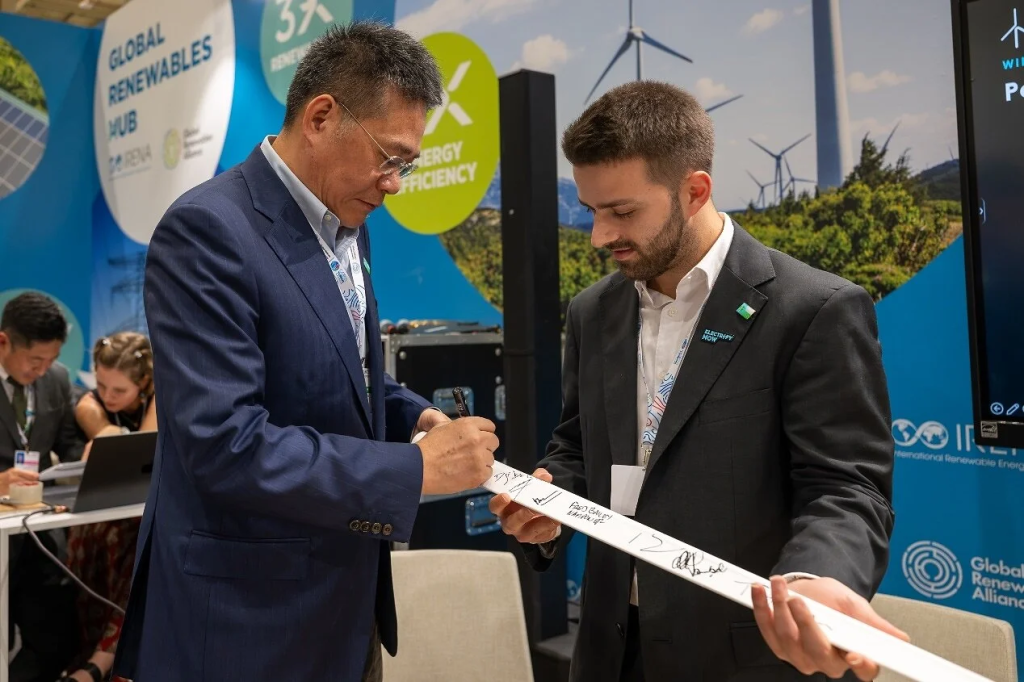
“The next chapter of the energy transition is not about more ambition. It is about making clean energy affordable, reliable and scalable — and turning that ambition into real energy systems,” Kane Xu said.
Envision’s approach is anchored in system-level integration, bringing renewable generation, storage and intelligent orchestration together into unified, dispatchable energy systems. Wind power is not a standalone asset, but the backbone around which reliable, flexible energy systems are designed.
“The next phase of industrial competitiveness will not be determined by who has the cheapest renewable electricity,” Kane Xu noted, “but by who can turn renewable electricity into reliable, flexible and competitive industrial energy systems.”
That judgment rests on a hard constraint: grid connection queues have become a critical bottleneck. IEA and industry estimates put the global renewable-and-storage queue at roughly 2.500 GW, with figures varying by scope and date. Adding generation without re-architecting the system to absorb and dispatch it only deepens the mismatch.
Envision’s answer is the AI-powered energy system: renewable generation, storage and orchestration designed as one dispatchable unit from the outset.
At COP31. Kane Xu endorsed the Global Wind Declaration for Powering the Future, launched by GWEC with TÜREB. For Envision, the declaration’s value lies in its call to “turn ambition into projects”—a principle to apply system-wide, not project by project.
In Türkiye, H.E. Alparslan Bayraktar, Minister of Energy and Natural Resources, met with Kane Xu and welcomed Envision’s expanded role in the country’s energy transition. The meeting underscored Envision’s growing engagement in Türkiye’s wind and storage ecosystem, including local manufacturing, project development and long-term operations.
In Uzbekistan, Envision is partnering with ACWA Power on Central Asia’s first utility-scale wind project integrated with battery storage. The project goes beyond adding renewable capacity: it shows how wind and storage can be designed as a single dispatchable asset to strengthen grid stability, and turn climate ambition into reliable, delivered clean power.
“We are ready to work with governments, financial institutions, and local industry partners,” Kane Xu said, “to turn the low-carbon transition into competitiveness, resilience, and energy security.” For Envision, COP31 will be measured by whether the systems built afterward are enduring, intelligent and inclusive: powered by inexhaustible wind and solar, made affordable at scale, and balanced in real time by AI.