
As Brazil seeks to boost its environmental credentials by hosting the United Nations’ climate summit, a proposal to build a railway through the Amazon has threatened to tarnish that image amid protests by Indigenous groups and environmentalists.
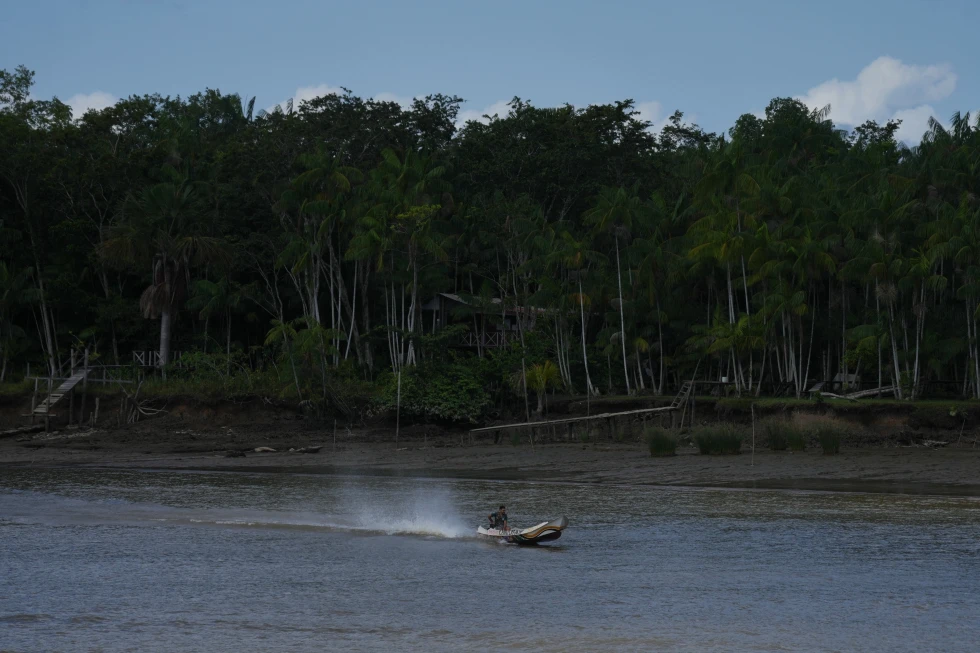
The Ferrograo railway project would transport commodities including corn and soybeans nearly 1.000 kilometers (621 miles) from a city on the southern edge of the rainforest to a port along a major tributary of the Amazon River. From there, commodities would be ferried to a larger port near Belem, the host city of the COP30 conference, for export to China and other trading partners.
The Brazilian government hopes to move forward with the railway once the country’s Supreme Court rules on the legality of changing a national park’s borders to allow construction and a congressional watchdog approves the plans. Protesters, including potentially affected Indigenous populations, took to streets and rivers in the Amazon this month to oppose it.
Currently, trucks carrying soybeans and corn through the rainforest must drive on roads that are unpaved in places, spilling grain that’s pushed to the side of the road each day. The proposed railway would follow a similar route from the city of Sinop to the port of Miritituba on the Tapajos River, a major tributary of the Amazon River.
As of July 2023 — months after President Luiz Inácio Lula da Silva returned to office — local officials estimated the rail project would cost about 20 billion Brazilian reais ($3.8 billion). Independent analysts estimate the price tag will be one-third higher than that.
Asked about Ferrograo and other projects in Northern Brazil, where most of the country’s Amazon lies, Transport Minister Renan Filho said: “You cannot become one of the world’s biggest exporters without an infrastructure.”
Speaking on TV Band, Filho added: “Today, differently from the past, central Brazil has a lot of heavy cargo and that needs to be transported.”
New projections are expected next year when Brazil’s Transportation Ministry hands in studies to the congressional watchdog. The government estimates that a single 170-car train could replace 422 trucks, reducing carbon emissions in the region, according to local media reports. On the other hand, any cutting of forests, no matter what for, often leads to more development. That happened across the Amazon as Brazil undertook major highway projects in the 1970s.
Since returning to office, Lula has made curbing deforestation in the Amazon a central part of his agenda — and has made significant progress. That effort seems to be at odds with a major train project.
Indigenous groups speak out
Experts say about 15 Indigenous groups are scattered through the Ferrograo pathway and the waterways leading to Barcarena, the port near Belem where the grain is loaded on ships for export.
“The cumulative impacts (from Ferrograo), that’s deforestation, monoculture and toxics, show that comparing emissions is not enough,” Alessandra Munduruku, leader of an Indigenous population that could be affected by the railway, said in a statement. She and other activists claim anyone living in the basins of the Xingo and the Tapajos rivers could lose their homes to farms if the railway increases shipping and makes agriculture more lucrative.
