
South Korea will require advertisers to label their ads made with artificial intelligence technologies from next year as it seeks to curb a surge of deceptive promotions featuring fabricated experts or deep-faked celebrities endorsing food or pharmaceutical products on social media.
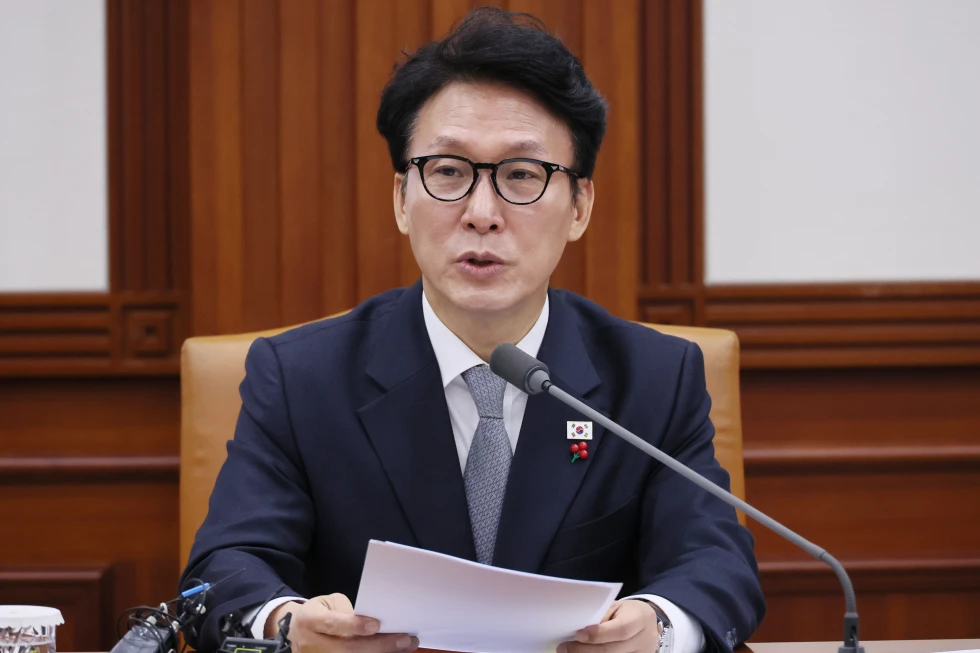
Following a policy meeting chaired by Prime Minister Kim Min-seok on Wednesday, officials said they will ramp up screening and removal of problematic AI-generated ads and impose punitive fines, citing growing risks to consumers — especially older people who struggle to tell whether content is AI-made.
Lee Dong-hoon, director of economic and financial policy at the Office for Government Policy Coordination, said in a briefing that such ads are “disrupting the market order,” and that “swift action is now essential.”
“Anyone who creates, edits, and posts AI-generated photos or videos will be required to label them as AI-made, and the users of the platform will be prohibited from removing or tampering with those labels,” he said.
AI-generated ads using digitally fabricated experts or deepfake videos and audios of celebrities, promoting everything from weight-loss pills and cosmetics to illegal gambling sites, have become staples across the South Korean spaces of YouTube, Facebook and other social media platforms.
AI fuels surge in false ads
Officials say it’s becoming increasingly difficult to monitor and detect the growing number of false ads fueled by AI. South Korea’s Food and Drug Safety Ministry identified more than 96.700 illegal online ads of food and pharmaceutical products in 2024 and 68.950 through September this year, up from around 59.000 in 2023.
The problem is also spreading into areas such as private education, cosmetics and illegal gambling services, leaving the Korea Consumer Agency and other watchdogs struggling to keep pace, the Government Policy Coordination Office said.
Beyond deceptive ads and misinformation, South Korea is also grappling with sexual abuse enabled by AI and other digital technologies. A Seoul court last month sentenced a 33-year-old man to life in prison for running an online blackmail ring that sexually exploited or abused more than 200 victims, including many minors who were threatened with deepfakes and other manipulated sexual images and videos.
Officials plan to raise fines and also introduce punitive penalties next year to discourage the creation of false AI-generated ads, saying those who knowingly distribute false or fabricated information online or through other telecommunications networks could be held liable for damages up to five times the losses incurred.
Officials will also strengthen monitoring and faster takedown procedures, including enabling reviews within 24 hours and introducing an emergency process to block harmful ads even before deliberation is complete. They also plan to bolster the monitoring capabilities of the Food and Drug Safety Ministry and the Korea Consumer Agency — using AI, of course.
