
Starcloud aims to be the first to mine a coin in space, says CEO Philip Johnston
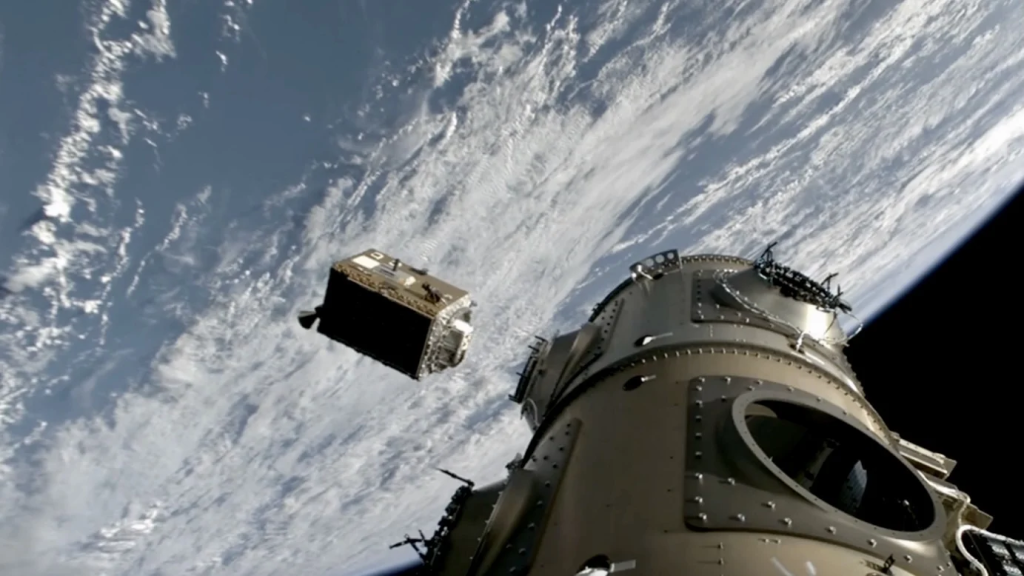
After proving it can run an Nvidia H100 GPU in orbit, US startup Starcloud plans to launch a dedicated bitcoin mining rig into space later this year.
During an appearance on the HyperChange YouTube channel, Starcloud CEO Philip Johnston said the company is “pretty focused on [the existing] constellation for now.” But later in the interview, he added: “There’s also bitcoin mining… We’ll have some bitcoin mining ASICs [Application-Specific Integrated Circuits] on the second spacecraft launching later this year.”
Earlier this month, Starcloud filed a request with the FCC to operate 88.000 satellites for orbital data centers. This includes launching a Starcloud-2 satellite carrying a GPU cluster, designed to boost solar power generation by 100 times compared with the first satellite.
“We think we’ll be the first to mine a coin in space,” Johnston added. (Another company, Intercosmic Energy, has also been working on bitcoin mining in space.)
Johnston tells PCMag he views bitcoin mining in orbit as a “future business” that could tap cheap energy by harnessing the Sun’s power, the same reason Starcloud and other companies, including SpaceX, are pursuing data centers in space.
One interesting difference is that bitcoin mining rigs—which range from $600 to a few thousand dollars—are still substantially cheaper than Nvidia’s enterprise GPUs, which are usually $30.000+. “We’re solving it for the energy piece. Whether we solve it for GPUs or bitcoin, this is relevant to us,” he told HyperChange.
Still, Johnston also indicated that the economics of space-based bitcoin mining are shaky. Current bitcoin ASICs can run on any cheap energy source. The profitability of a mining rig can also run out fast as new models emerge.
In the same interview, Johnston revealed that one of the five GPUs on a Starcloud satellite that launched in November failed. “It was actually unresponsive before we launched it,” he said.
