
Despite a pessimistic sounding now-deleted blog post highlighting challenges caused by the current memory shortage, Valve later said it still plans to ship the Steam Machine, Steam Controller, and Steam Frame in 2026.
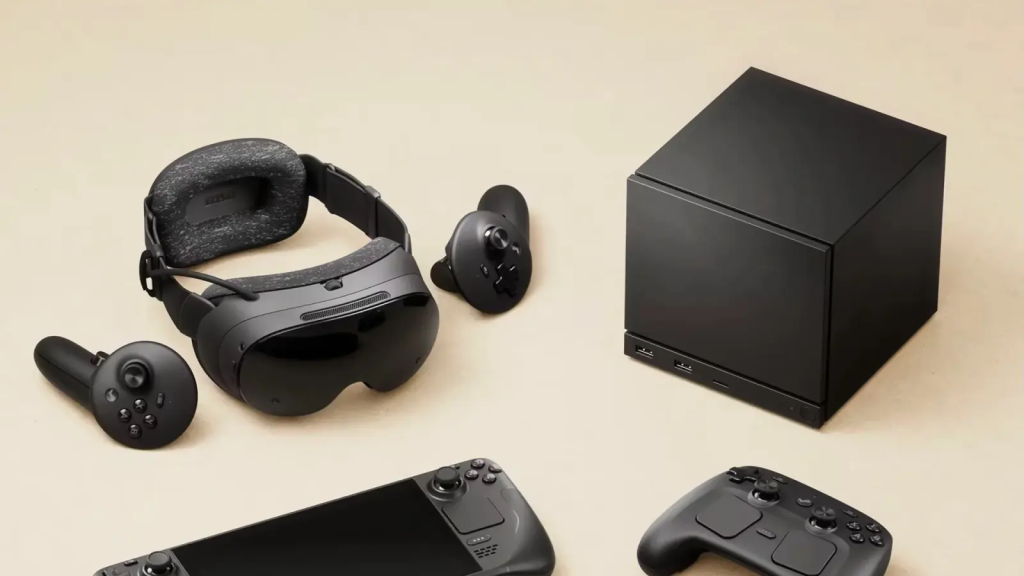
Despite an unstable tariff situation and the rise of AI making RAM more expensive than ever, Valve still plans to ship its long-awaited second-generation Steam Machine, alongside the next-gen Steam Controller and Steam Frame, at some point in 2026. However, it may not arrive as soon as initially promised.
Earlier this week, the gaming giant posted a blog that gave an uncertain update on the release of the second-generation Steam Machine, initially pegged for an early 2026 release. It said: “We hope to ship in 2026. but as we shared recently, memory and storage shortages have created challenges for us.” Many members of the gaming community picked up on the news, with some blaming AI demand for the delay to the mini PC.
But the reference was later scrubbed from Valve’s website. Valve then updated the blog post to say it “will be shipping all three products this year.”
The new Steam Machine is a portable mini PC packed into a 6-inch black cube, custom-built to enable customers to play games from their Steam library on their TV screen, running on the same Linux-based OS which powers the Steam Deck. It was announced in November alongside the next-gen Steam Controller and the VR headset, the Steam Frame, which would throw Valve into competition with headsets like the Meta Quest.
Even if the portable gaming PC does land this year, it’s still downgraded from Valve’s initial planned rollout in early January 2026. when the new product lineup was announced in November last year. Addressing the concerns, Valve PR representative Kaci Aitchison Boyle said, “nothing has actually changed on our end” in a comment to The Verge.
The global chip shortage looks unlikely to recede anytime soon. In February, Nvidia’s finance chief Colette Kress predicted that the shortage of gaming chips would last until the end of 2026 in an interview with Reuters, amid demand from the AI industry outstripping demand from console sales.

