
The iPhone satellite communications provider Globalstar is hinting the replacement satellites will also ‘strengthen’ the company’s current offerings.
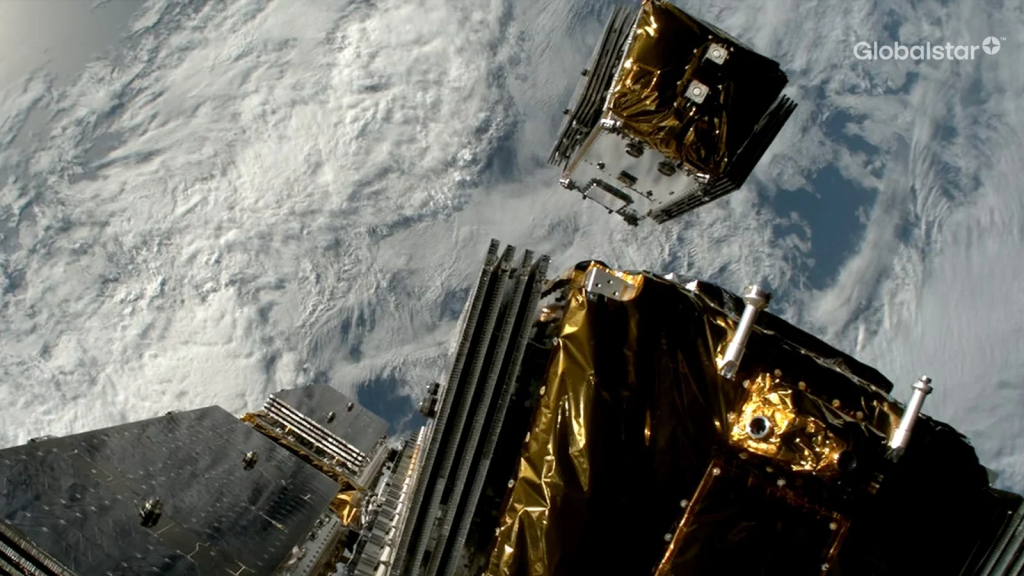
Ahead of its pending acquisition from Amazon, iPhone satellite feature provider Globalstar has launched eight new satellites to both maintain, and “strengthen” its existing constellation.
This past weekend, Globalstar successfully deployed eight replacement satellites for the company’s “HIBLEO-4” network, which has been powering the satellite-based messaging on Apple iPhones.
On Saturday, Globalstar used a Falcon 9 rocket from SpaceX to send the satellites into orbit. “Initial health assessments indicate the satellites are performing as expected, and engineers are actively monitoring their status as they progress through early orbit operations,” the company said.
These appear to be the first new Globalstar satellites since 2022 when the company launched the single “FM-15” spare satellite into orbit, according to tracking from astronomer Jonathan McDowell. Prior to that, the company launched six satellites in 2013.
The HIBLEO-4 replacement satellites have been in development since at least 2022 when Globalstar reached a $327 million contract with Canadian satellite developer MDA Space. The next year, Globalstar filed with the US’s Federal Communications Commission to replace the existing HIBLEO-4 satellites with new versions to eventually form a larger 32-satellite constellation, up from 24.
At the time, the company told the FCC the new satellites would “preserve and enhance Globalstar’s existing, core MSS (mobile satellite service) offerings,” almost a year after it began officially powering the Emergency SOS feature on iPhones, giving users a way to reach emergency services in cellular dead zones.
However, the replacement HIBLEO-4 satellites have faced delays, with MDA Space blaming “certain key suppliers” for forcing it to push back the satellite delivery to early 2026. In May, Globalstar then postponed the launch again “to allow more time” for the company to prepare.
Globalstar hasn’t exactly specified how the new satellites will improve the existing network when the satellite messaging on the iPhone has been limited to texting. But in a note to journalists, the company said Saturday’s launch represented a “strategically significant move toward maintaining service continuity while also strengthening its satellite infrastructure.” The eight satellites will orbit about 1.414 kilometers from Earth, and use the same 1.6/2.4 GHz radio bands as before.
The company also plans on launching another 9 satellites “as part of a broader 17-satellite replenishment program.” “The remaining nine satellites on order are in the final stages of integration at MDA Space,” the satellite manufacturer said.
But perhaps the more meaningful upgrades will come from two other satellite constellations Globalstar is working on. The first is a next-gen 48-satellite constellation, called C-3. that’ll start going up as early as next year and promises to offer better signal strength, including indoors and in cars.
Last month, Amazon also announced plans for a larger 5.000-satellite constellation capable of beaming voice and mobile data to consumer phones, including Apple devices. The company plans on sending up the first satellites in 2028 as it races to compete with SpaceX’s Starlink Mobile and other players including AST SpaceMobile.