
NASA announced that the mission had been canceled earlier this week, due to an ‘attitude control issue.’ NASA first reported issues with the spacecraft, including it spinning out of control, at the end of July.
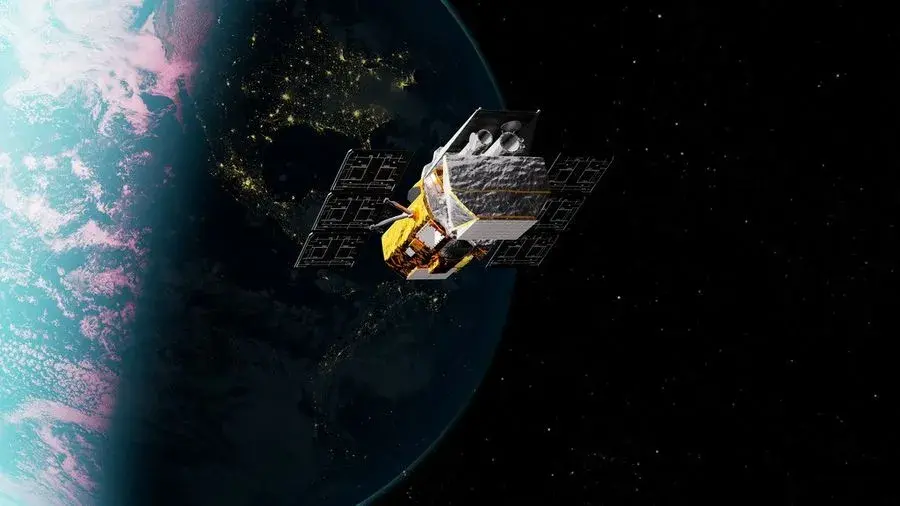
NASA has canceled its recent mission to save one of its key space observatories from falling to Earth.
Swift, which launched in 2004. captures data about gamma-ray bursts (GRBs), which can give scientists insights about the early history of the universe. Due to issues with increased solar activity, the observatory was projected to reenter Earth’s atmosphere and burn up at some point in late 2026.
On July 3. NASA launched the LINK spacecraft, built in partnership with Arizona-based start-up Katalyst Space Technologies, into low Earth orbit as part of plans to save Swift. The unmanned mission aimed to grab hold of and boost Swift upwards, extending its lifespan for roughly a decade.
But NASA announced that the mission had been canceled earlier this week, due to an “attitude control issue.” The spacecraft will instead attempt to conduct “rendezvous and proximity operations” with NASA’s Neil Gehrels Swift Observatory. In July, the agency said that LINK’s attitude control systems, which are meant to stabilize the spacecraft, malfunctioned, which caused it to spin and resulted “in sporadic communications.”
NASA Administrator Jared Isaacman said: “This is not the outcome we were working toward, but it does not change why this mission was worth attempting.”
He added that NASA is “going to learn everything we can from LINK’s rendezvous attempt and put those lessons to work on the missions that follow.”